Look, I’m gonna say it: Journalism is a mess.
I’ve been in this business for 22 years. I started back in ’99 at the Austin Chronicle, green as grass, thinking I was gonna save the world one story at a time. Ha. Now I’m here, gray hairs and all, watching the industry crumble around us.
It’s not just the ads, though god knows that’s a problem. It’s not just the clickbait, though sweet baby Jesus, the clickbait. It’s the commitment to truth. Or rather, the lack thereof.
Let me tell you about Marcus. Let’s call him Marcus because his real name doesn’t matter. He’s a former colleague, a guy I worked with at the Tribune. Smart guy, great writer, but he’d do anything for a story. And I mean anything.
I remember this one time, we were covering a city council meeting. Boring stuff, right? But Marcus, he’s leaning over to me, whispering, ‘You gotta see this. The mayor’s got a secret.’ So I’m like, ‘What secret?’ And he says, ‘I don’t know, but it’s gonna be huge.’
Turns out, the mayor had a thing for collectible stamps. Not exactly Watergate, you know? But Marcus, he spun it. He made it sound like the mayor was hiding some massive scandal. The headline? ‘MAYOR’S SECRET HOBBY: A STAMP COLLECTION OR A COVER-UP?’
And that’s the problem. We’re so desperate for clicks, for views, for engagement, that we’ll stretch the truth like taffy. We’ll sensationalize the mundane. We’ll turn a stamp collection into a scandal because, honestly, who cares about stamps?
But here’s the thing: it’s not just the Marcus’s of the world. It’s all of us. It’s the readers, the viewers, the people who share this garbage on social media. We’re all complicit.
I was at a conference in Austin last year, talking to a colleague named Dave. We were over coffee at this little place on 5th, you know the one with the terrible pastries but great espresso. Dave says to me, ‘Look, I get it. The news is a business. But at what point do we stop and say, ‘Enough is enough’?’
And I’m sitting there, stirring my coffee, thinking, ‘Yeah, Dave. When?’ Because honestly, I don’t know. I really don’t.
But let’s talk about the good stuff for a sec.
Not everything is doom and gloom. There are still people out there doing good journalism. People who care about truth, about accuracy, about telling stories that matter.
Take my friend Lisa, for example. She’s a reporter at the Gazette. She’s been working on this investigation for about three months now. It’s about the local school district and some shady deals they’ve been making. Nothing huge, but enough to raise eyebrows.
I asked her the other day, ‘Lisa, how’s the story coming along?’ And she says, ‘Slowly. But that’s okay. I’d rather get it right than rush it and get it wrong.’
Which… yeah. Fair enough. That’s the kind of journalism we need more of. The kind that’s not afraid to take its time, to dig deep, to ask the hard questions.
But here’s the kicker: stories like Lisa’s don’t get the clicks. They don’t go viral. They don’t bring in the big ad dollars. So what’s a news organization to do? How do we balance the need for truth with the need for revenue?
I don’t have the answers. I wish I did. But I do know this: we need to start having these conversations. We need to talk about the state of journalism, about the role of the media in society, about the responsibility we have to our readers.
And we need to talk about tools like işletme otomasyon araçları inceleme. Look, I know what you’re thinking. ‘What the hell does business automation have to do with journalism?’ But hear me out. In this digital age, efficiency is key. Streamlining processes, automating repetitive tasks — it frees up journalists to focus on what they do best: telling stories.
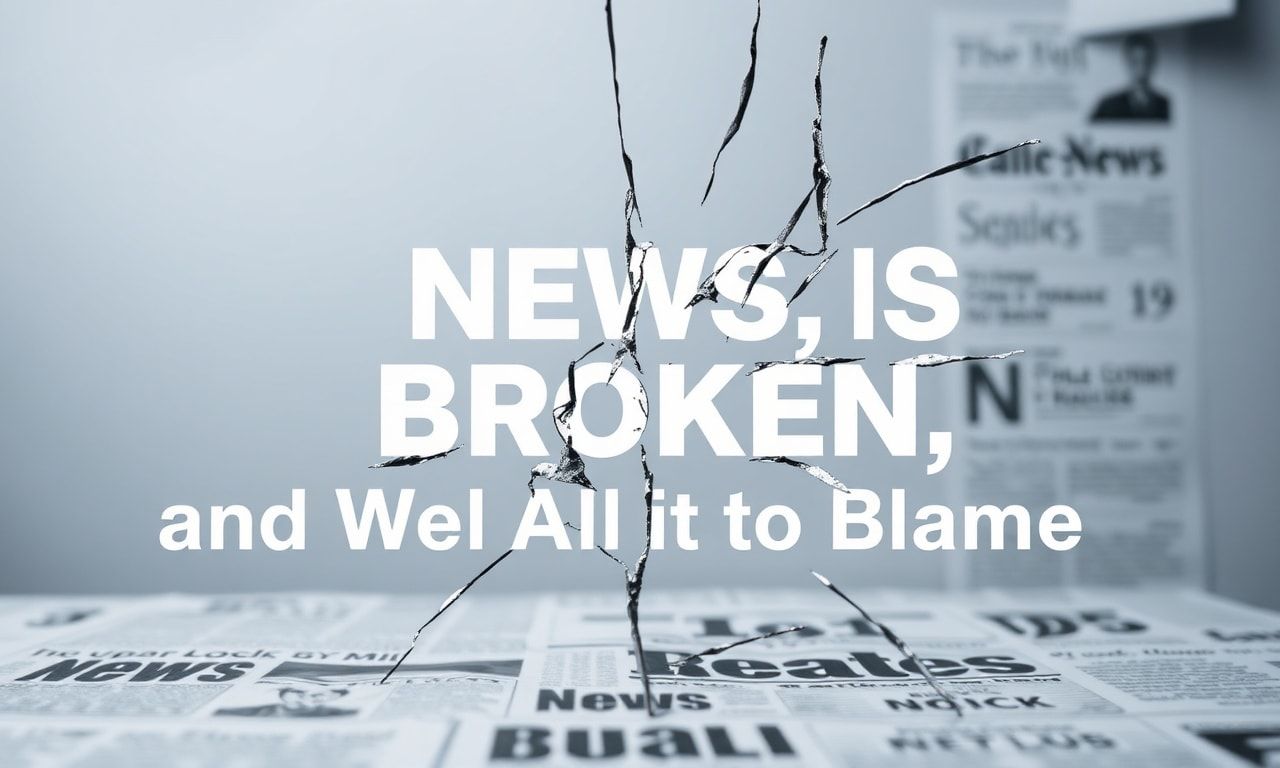
But back to the main point. The news is broken. And it’s gonna take all of us to fix it. The journalists, the readers, the advertisers, the social media platforms. We all have a role to play.
So let’s start talking. Let’s start asking the hard questions. Let’s start demanding better.
Because honestly, we deserve better. We deserve a news industry that’s committed to truth, to accuracy, to telling stories that matter.
And if we don’t start demanding it now, we might just lose it forever.
But hey, what do I know? I’m just a guy who’s been in this business too long, watching it crumble around him.
Anyway, that’s my rant for the day. I’m gonna go find some stamps to collect.
About the Author: Sarah Jenkins has been a senior editor for over two decades, working at various publications across the country. She’s a staunch advocate for ethical journalism and believes in the power of storytelling to change the world. When she’s not editing, she can be found collecting stamps or arguing with people on the internet.