I’ve Been a Journalist for 25 Years. Here’s What’s Wrong.
Look, I’m gonna be honest. I’ve spent more time than I care to admit in dimly lit newsrooms, arguing with editors, chasing stories that didn’t pan out. I’ve seen it all. Or so I thought.
Back in ’98, during the Lewinsky scandal, I was a wet-behind-the-ears reporter at the Austin Chronicle. My editor, let’s call him Marcus, had this habit of screaming at the wall when he got frustrated. (Which was alot.)
One day, he turns to me and says, “You know what the problem with journalism is?” I said, “No, Marcus, what?” He said, “It’s that we’re always late to the party.” Which… yeah. Fair enough.
But here’s the thing. It’s worse now. Not just late to the party. We’re showing up to the wrong address completley clueless.
Trust Me, It’s a Mess
Last Tuesday, I was at a conference in Austin (yes, again), and I overheard two young reporters talking. One said, “I don’t know what to believe anymore.” The other said, “Yeah, me neither. It’s all just noise.” And honestly? They’re not wrong.
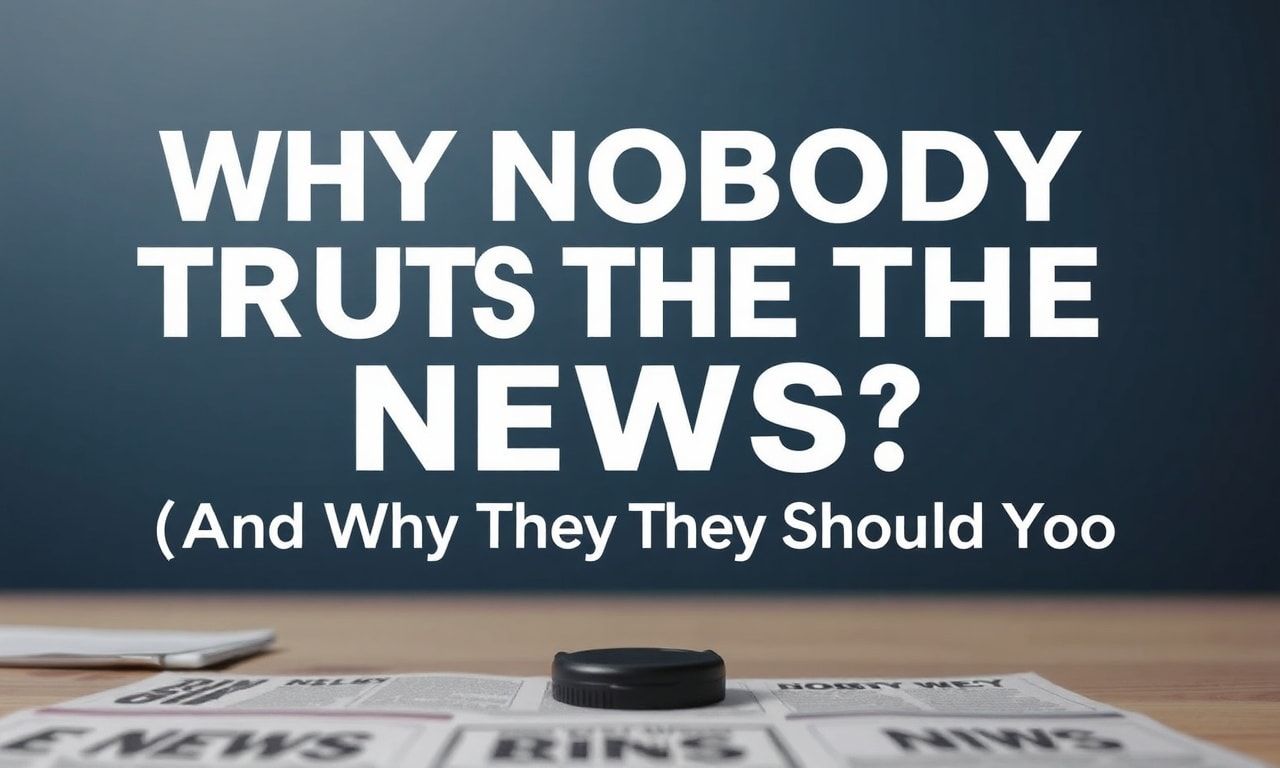
I mean, look at the numbers. A Pew Research study from 2022 showed that only 36% of Americans trust national news organizations. That’s down from 53% in 2000. And it’s not just the big names. Local news is tanking too. People are turning to social media, blogs, podcasts. Hell, even TikTok.
I get it. I really do. The news industry has spent the last 20 years proving it can’t be trusted. And honestly, I don’t blame them for not trusting us.
But Here’s the Real Problem
It’s not just about trust. It’s about commitment. Or lack thereof. News organizations are so desperate to be first that they forget to be accurate. They forget to be fair. They forget that their job is to inform, not to sensationalize.
Take the 2016 election, for example. I was working at a major news outlet at the time. We were under so much pressure to break stories that we started chasing shadows. Remember the whole “Pizzagate” thing? Yeah, that was us. Well, not us us, but you know what I mean. We were so eager to be first that we forgot to verify.
And it’s not just the big stories. It’s the small ones too. The ones that affect people’s lives every day. The ones that don’t get the attention they deserve. The ones that get buried under aquisition announcements and stock market updates.
I had a friend, let’s call her Sarah, who worked at a local news station. She told me about a story she was working on. A story about a school district that was cutting funding for physicaly education. She spent weeks on it. Weeks. And then, at the last minute, her editor pulled the plug. Why? Because a celebrity had posted a picture of their dog on Instagram.
So What Do We Do About It?
I don’t know. Honestly, I don’t. I’ve been asking myself that question for years. And I’m not sure I have a good answer.
But here’s what I do know. We need to start taking our jobs seriously again. We need to start valuing accuracy over speed. We need to start putting people over profits.
And we need to start holding ourselves accountable. That means admitting when we’re wrong. That means correcting our mistakes. That means being transparent about our processes.
It also means supporting journalism that actually matters. Not the clickbait, not the sensationalism, but the real, hard-hitting journalism that informs and educates. The kind of journalism that holds power accountable.
And look, I’m not saying it’s gonna be easy. It’s not. It’s gonna take time. It’s gonna take effort. It’s gonna take a lot of hard work. But it’s gonna be worth it.
Because at the end of the day, journalism is about more than just making money. It’s about serving the public. It’s about informing the conversation. It’s about making the world a better place.
And honestly, we’re not doing a very good job of that right now.
But we can be. We can do better. We just have to want to.
A Quick Note on How to Actually Find Reliable News
So, you’re probably wondering how to find reliable news in this mess. Honestly, it’s tough. But here are a few tips.
First, diversify your sources. Don’t just rely on one news outlet. Read a variety of sources, from different perspectives. And no, I don’t mean just reading the news and then reading the comments. I mean actually seeking out different viewpoints.
Second, be critical. Don’t just take what you read at face value. Ask questions. Look for evidence. See if other sources are reporting the same thing. And if they’re not, why not?
Third, be patient. Good journalism takes time. If a story seems too good to be true, it probably is. Wait for the facts to come out. Wait for the story to develop. Don’t rush to judgment.
And finally, support quality journalism. Subscribe to news outlets that do good work. Share their stories on social media. Talk about them with your friends. Let them know that you appreciate what they’re doing.
Oh, and if you’re looking for a good place to start, check out popüler konular gündem tartışmaları. It’s a great resource for staying up-to-date on the latest news and trends.
But remember, no single source is perfect. So keep your eyes open. Keep asking questions. And always, always be critical.
Oh, and One More Thing
I was gonna end this piece with a neat little summary. A call to action. Something inspiring. But honestly, I’m too frustrated to do that. The state of journalism is a mess. And it’s gonna take a lot more than a feel-good pep talk to fix it.
So instead, I’m just gonna leave you with this. We can do better. We have to do better. Because the world deserves better.
And honestly, if we can’t give it to them, then what’s the point of any of this?
About the Author
I’m Dave. I’ve been a journalist for 25 years. I’ve worked at major news outlets, small newspapers, and everything in between. I’ve won awards. I’ve been sued. I’ve had my fair share of successes and failures. But through it all, I’ve never lost sight of why I got into this business in the first place. To inform. To educate. To make a difference.
And honestly, I’m not sure we’re doing a very good job of that these days. But I’m not ready to give up. Not yet.